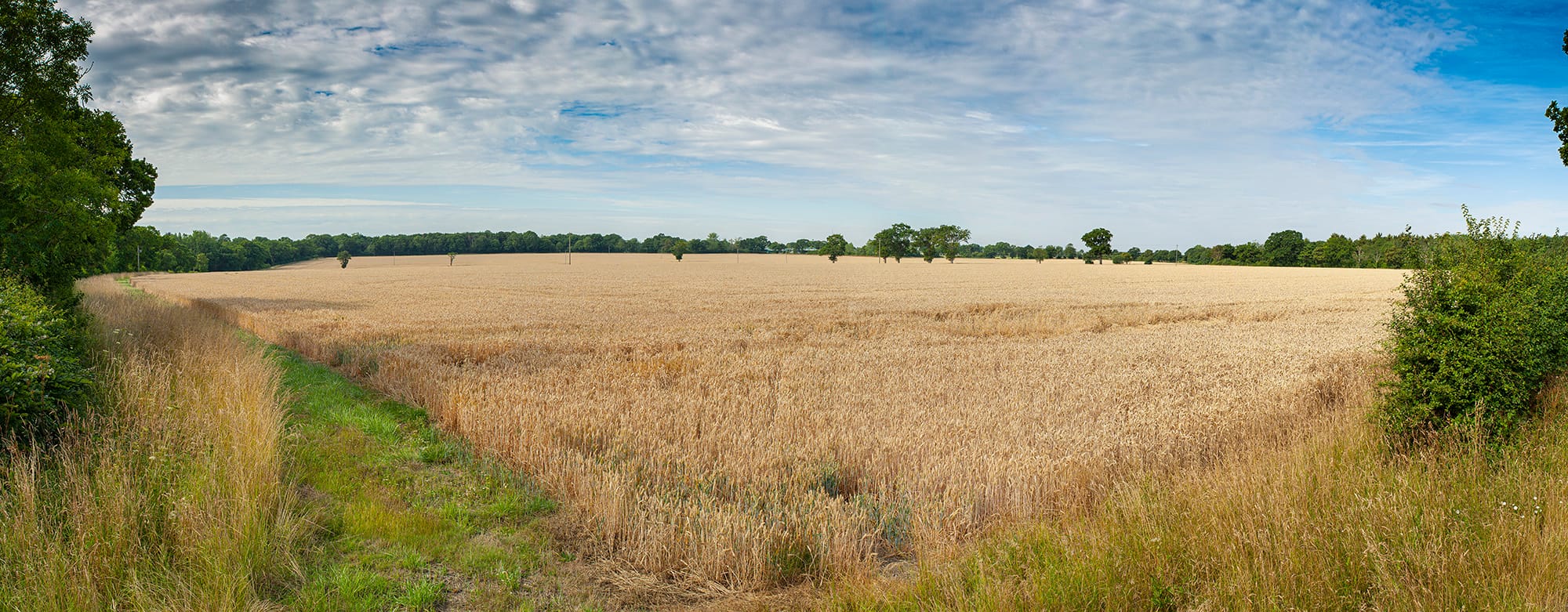
Why Grays Lane?
The development of this site is being sought by Pathfinder Clean Energy (PACE); a company formed in 2018 that has never constructed a solar factory. The developers and investors behind PACE are Hitachi and Mitsubishi.
It is the task of PACE to work out where connections can be made to the National Electricity Grid and to approach nearby landowners with a variety of lucrative options for leasing their land. Once agreement has been reached with the National Grid and the landowner(s) PACE apply for planning permission from the relevant Local Planning Authority; in this case to East Suffolk Council. If they manage to obtain permission, they then search for a construction company that can build the site and they are likely to opt for the lowest build cost to ensure maximum profits for investors.
The details of contractual agreements reached between PACE and any of the companies to be involved in constructing and running the site will not be automatically available for pubic inspection, so it will be difficult to monitor what has been agreed and who is responsible.
The site at Grays Lane has been selected because of its proximity to the national grid and because the single landowner is keen to maximise profits that can be generated from his land. Making the claim that a key advantage of any renewable energy site is its proximity to the grid has been challenged recently by a government Planning Inspector who determined that access to the National Grid was obviously essential but “does not bring a public benefit and adds no weight to the planning case for the proposals”. The Secretary of State has since agreed to this assessment.
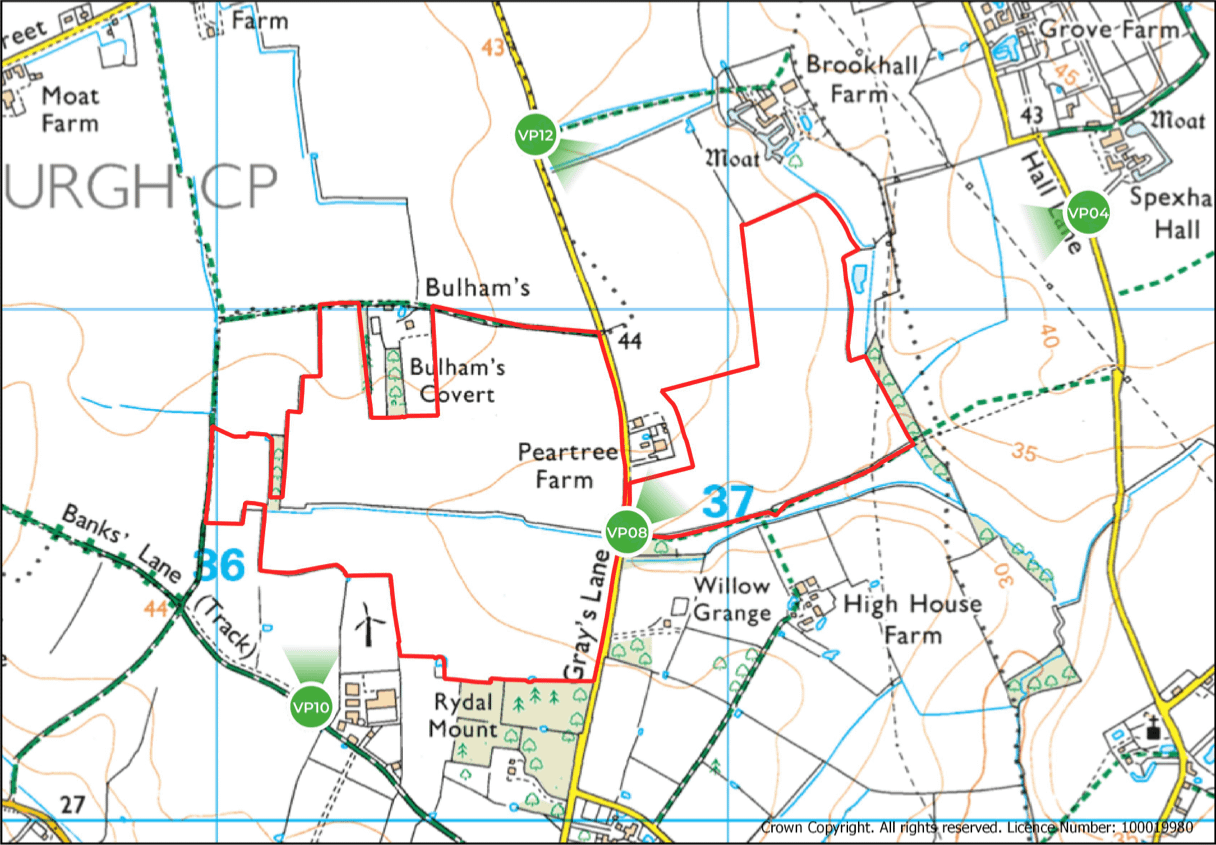
Map of The Proposed Site
Impact on the Land
PACE claim that solar factories take up ‘a very small proportion of the land they occupy’ by which we assume they must mean the land taken up by the supporting piles on which the panels rest are the solid features that take up a small proportion of the land area. The solar panels fixed above the piles however will occupy 90% of the land area within the site boundary. Nothing much will grow successfully below the panels because there will be very little sunlight reaching the ground surface; this is why we refer to the site as a ‘solar desert’. The only areas PACE show as having any scope for new natural planting are narrow strips of land, mostly occupied by access tracks, around the site edge and through its centre.
PACE claim that ‘agricultural land will not be lost’ and ‘that sheep can graze under and around the solar panels.’ We have found no examples of sheep being managed in this way and the farming in this area is predominantly arable; there is only one sheep farmer in the area. Only 26% of solar factories in the UK graze sheep to any extent – 71% cut the grass. Management practices vary widely but research shows that unless good management practice is built into contractual arrangements and monitored, claims about biodiversity and conservation are mostly worthless.*
We have found no evidence that good land management practice is built into contactual arrangements with solar energy companies and this is not an issue considered by planning authorities in advance of awarding any permissions to build.
* BRE (2014) Agricultural Good Practice Guidance for Solar Farms – Ed J Scurlock
* SOLARVIEW Ecolgical Monitoring of Solar Sites Overview – 2019 Surveys
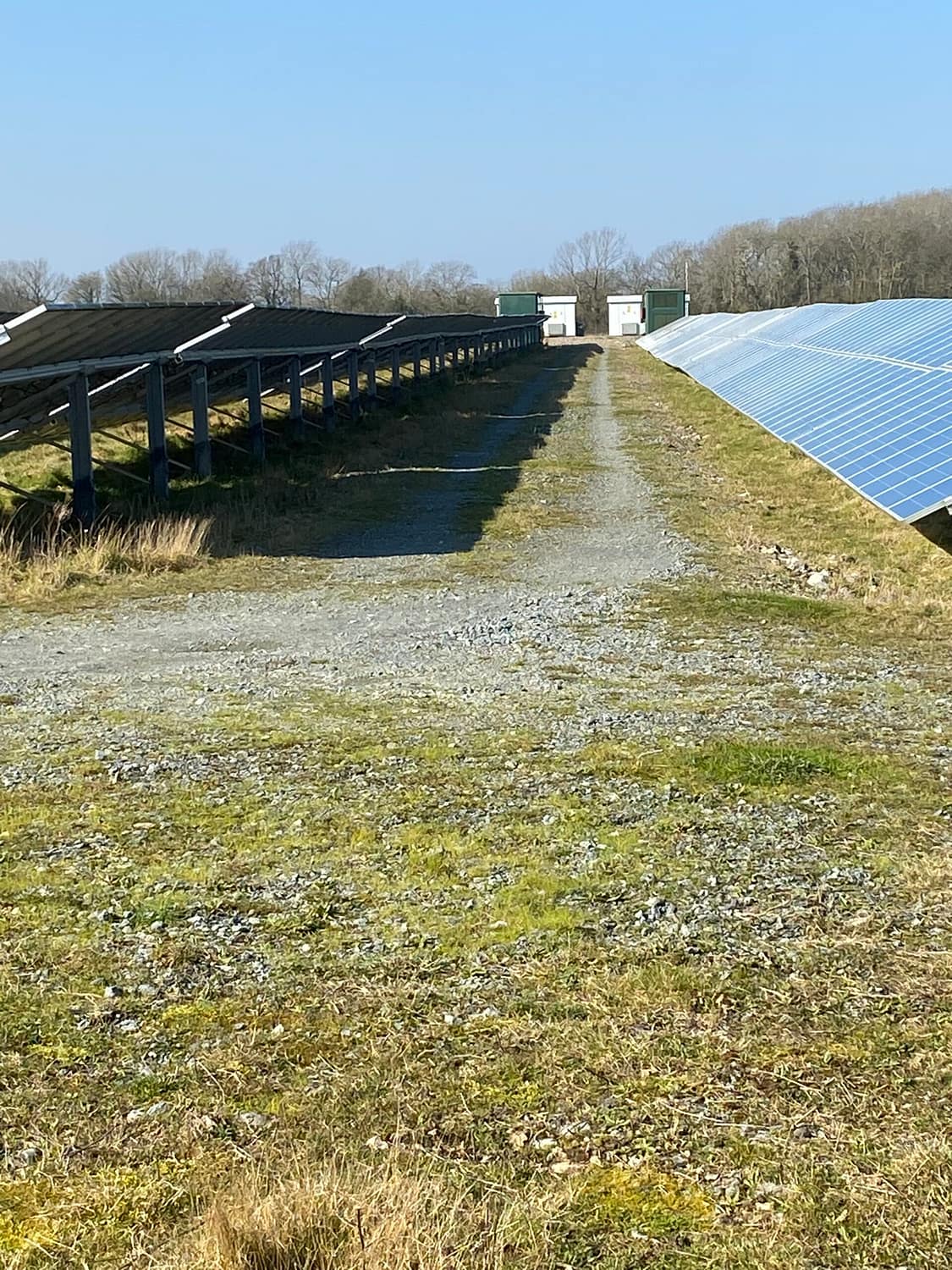
Similar areas of land expected to support new growth in the nearby Bonner’s Farm site in Wissett look like this:
Impact on Food Supply
For a period of 40 years almost 200 acres of food growing fields will be removed from production around Grays Lane. As a nation we import 40% of our food and it is predicted that we will be consuming 56% more food by 2050 because of population increases. There is a current rush of applications for solar farms, in England and Wales, with approximately 300 pending, which, if successful, will remove 30-40,000 acres from agricultural production. Our food imports are predominantly from countries south of the UK who will be more affected by global warming and may not be able to meet increasing export demands.
There are many ways to produce electricity but only one, solar, that puts at risk the security of food production for ourselves and animals. Land is an efficient form of energy production for food and it is counter intuitive to use good quality agricultural land for a very inefficient form of electrical energy production. Solar power has a yield (the proportion of time during which a renewable scheme actually generates energy) of just 11%.
The National Food Strategy recommends that DEFRA continues to make direct payments to farmers until 2029 to help them transition to sustainable land use. This approach to land is entirely consistent with the National Policy Framework which sees soil as an essential natural capital asset that provides important ecosystem services such as a growing medium for food, timber and other crops, as a store for carbon and water, as a reservoir of biodiversity and as a buffer against pollution.
Land graded as 1, 2 and 3a is the best and most versatile land and category 3a makes up 83% of the Grays Lane site. The National Policy Statement for Renewable Energy Infrastructure clearly envisages protecting good agricultural land. It states that:
Where possible, ground mounted Solar PV projects should utilise previously developed land, brownfield land, contaminated land, industrial land, or agricultural land preferably of classification 3b, 4, and 5 …
Why then is the Grays Lane site being considered for a solar factory?
Impact on Local Residents
There are many other sites where access to the electricity grid and a willing landowner could be considered without destroying good quality agricultural land and the heritage beauty of this landscape. Local residents living in several houses on or very near the site will be surrounded by solar panels, cameras and fencing and their lives will be seriously damaged by the loss of house value and amenity with all profits going to individuals who do not live here.
Rainwater Drainage
PACE claim that their proposal has been ‘designed not to increase the risk of flooding’. They may well be correct but the clay soil of this area takes a while to absorb rain water and a heavy downpour on the glass panels causes water to run off in channels between the panels with less chance of spreading and being absorbed more evenly over the land. Since the solar factory at Bonner’s Farm has been in place, heavy rain has sometimes caused excessive run off into the village beck. The Environment Agency have installed natural defences in the main drainage ditch from Bonner’s Farm, and elsewhere in the area, to limit the rate at which water flows into Halesworth under such circumstances.


It is certainly not clear what design features have been included by PACE to prevent similar problems on the Grays Lane site.
Storage Batteries
The Grays Lane site will include 32 structures the size of shipping containers to house storage batteries. PACE claim that ‘no harmful greenhouse gas emissions are produced’ and that the batteries ‘do not contain hazardous materials’. Research into the potential fire hazard of these Lithium-Ion batteries shows that they can be highly dangerous. See Here
Construction
PACE estimate that it will take up to 30 weeks to construct the site (7 months) and the movement of large vehicles will be ‘managed to minimise disturbance’. Access to the site from Spexhall down Grays Lane or through the main street in Wissett and up Grays Lane is entirely unsuitable for the large vehicles likely to be involved. It is already a problem in Wissett when large agricultural and commercial vehicles try to negotiate the main street, so continual traffic over an extended period, for a major construction site is unacceptable.